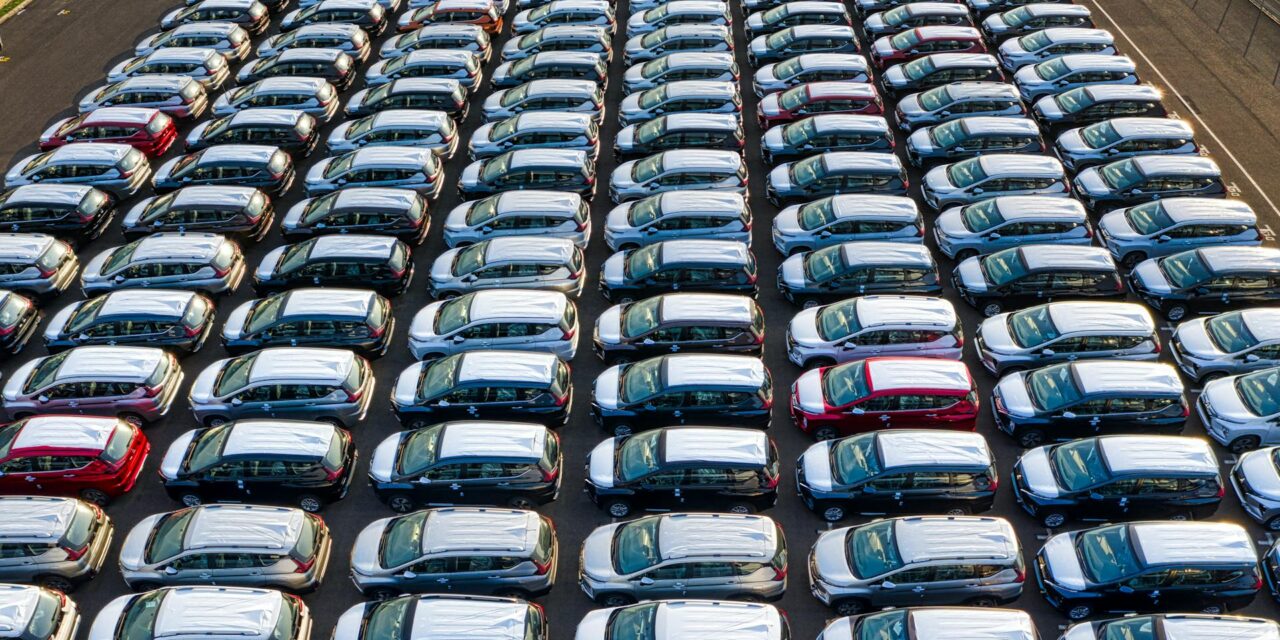
The world’s largest automotive market is showing signs of severe strain as Chinese manufacturers grapple with massive overcapacity, triggering a price war that threatens both domestic and international automakers. After attending PwC’s Chinese Automotive webcast last year, we expected two future roads: Either the Chinese manage to truly raise the utilization of their factories or their strategy fires back.
With production capacity hovering around 30 million vehicles annually across 170 factories, the industry faces a critical turning point that could reshape the global automotive landscape. Industry analysts at JSC Automotive warn that China’s auto market bubble could trigger a 20-25% market contraction if it bursts. The situation has become particularly acute as manufacturers operate well below profitable capacity levels, with some facilities running at merely 12-15% utilization – far below the 80% threshold needed for profitability.
The market disruption has already altered the competitive landscape, with traditional leaders facing unprecedented challenges. Volkswagen’s joint venture with FAW has slipped from its 2022 market-leading position to third place in Q1 2025, while Chinese manufacturers BYD and Geely have claimed the top spots. In the electric vehicle segment, Chinese brands now control 45% of the market, pushing Tesla to fourth place and leaving German manufacturers outside the top ten. “We’re witnessing combat pricing where hardly anyone is making money,” notes Jochen Siebert, founder of JSC Automotive in Shanghai. The pricing pressure has become so intense that joint ventures between Western and Chinese brands are offering steeper discounts (24%) than local manufacturers (10%), highlighting the desperate measures being taken to maintain market share. The strategic implications extend far beyond China’s borders. While Chinese manufacturers struggle to gain significant traction in mature markets like Germany – where BYD managed only 27,000 vehicle sales in Q1 2025 compared to VW’s 800,000 – the industry consolidation could strengthen surviving Chinese manufacturers for future international expansion. Yet, overcapacity is also a problem in Germany’s manufacturing landscape. The OEMs were forced to adjust the production lines because of the lower than expected EV sales.
For global automakers, the crisis presents a complex strategic challenge: maintaining presence in the vital Chinese market while protecting profitability. Premium segment leaders like Mercedes-Benz and BMW may find some shelter in their brand strength, but Audi already underwent a repositioning of its brand in China. Mass-market manufacturers face increasing pressure to defend their positions while navigating the industry’s structural transformation. The situation serves as a critical indicator of the automotive industry’s broader transition, where overcapacity meets changing consumer demands and technological disruption.
The post was written in collaboration with our automotive copywriter agent (based on Claude Sonnet 3.5). Find Der Spiegel’s article here.