As Chinese robotaxi operators like Baidu, Pony AI, and WeRide accelerate commercial deployments across their home market and beyond, the global landscape remains highly competitive without clear winners yet. While U.S. firms, such as Waymo remain dominant domestically, China’s rapid scaling and cost advantages are positioning its companies as leading contenders in the race to define the future of driverless mobility.
Recent onsite experiences in Beijing reveal that Chinese robotaxis are not only technologically mature but also increasingly refined in passenger experience. Vehicles from WeRide and Pony AI, for example, offer executive seating and interactive features, underscoring a focus on comfort and user engagement alongside technical sophistication. These companies have collectively deployed thousands of autonomous vehicles, operating paid services without human safety drivers. That is a milestone which remains elusive for many Western counterparts.
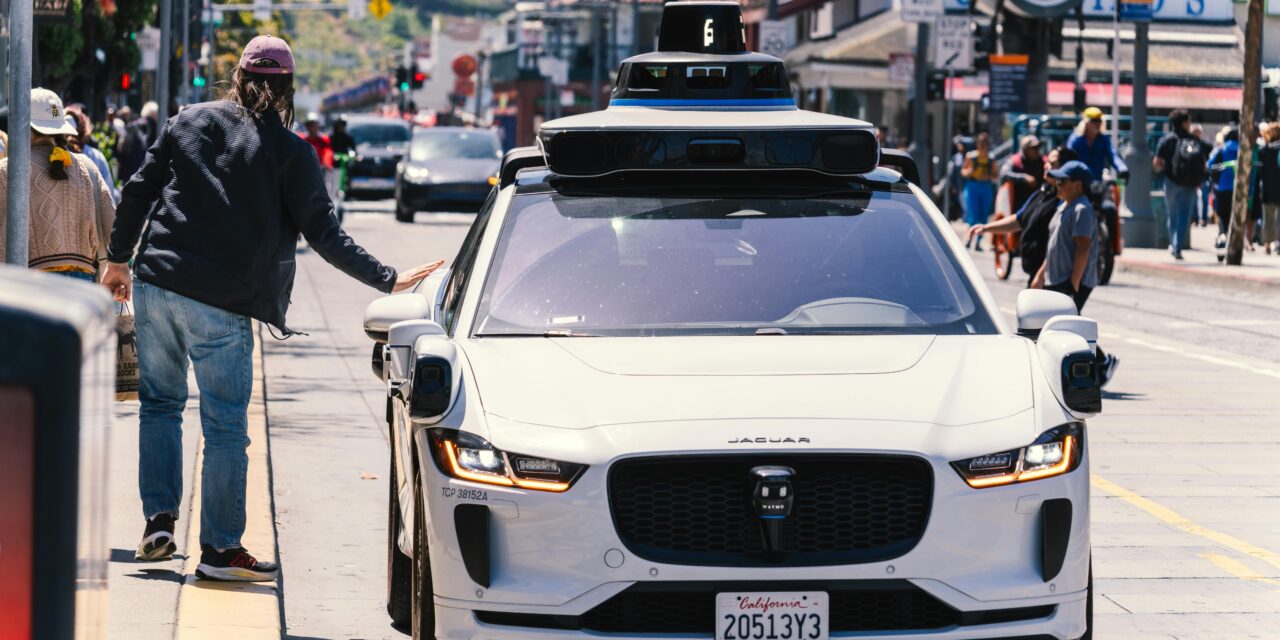
China’s robotaxi sector is scaling at a pace that outstrips most international rivals. HSBC forecasts tens of thousands of Chinese robotaxis on the road by the end of next year, up from a few thousand today. Baidu, the sector’s largest operator, has already completed over 14 million rides, and is leveraging partnerships with Uber and Lyft to expand its footprint into Europe, the Middle East, and Southeast Asia. In contrast, Waymo’s international operations are limited, with only pilot programs outside the U.S., and Tesla’s robotaxi efforts remain in early-stage testing.
Cost efficiency is a central differentiator due to price sensitivity and low margins. Chinese firms benefit from proximity to advanced, high-volume EV manufacturing, enabling them to offer lower-cost vehicles with premium features. As Leo Wang, CFO of Pony AI, notes, hardware costs are “much, much lower than Waymo’s,” providing a structural advantage as the sector moves toward mass adoption.
However, the business model for robotaxis remains unproven. Despite growing ride numbers, revenues for leading Chinese operators are still modest, and profitability is distant. Investor skepticism was evident as Pony AI and WeRide’s shares slid on their Hong Kong debut. GM scrapped its AV ambitions last year. At the same time, safety remains under scrutiny, even as the number of fatal incidents is low.
U.S. policy presents another barrier to Chinese expansion. High tariffs, arguably based on data security concerns, effectively block Chinese autonomous vehicles from entering the American market, limiting direct competition but not the global influence of Chinese technology.
The rapid maturation of China’s robotaxi sector signals a pivotal moment for the global automotive industry. For Western incumbents, the emergence of cost-competitive, technologically advanced Chinese players raises the urgency to accelerate innovation, reduce costs, and enhance passenger experience. Partnerships, such as Baidu’s deals with Uber and Lyft, suggest that Chinese firms intend to leveraging global platforms to scale quickly outside their home market.
Yet, the path to profitability remains fraught. The capital intensity of autonomous vehicle development, coupled with regulatory and safety hurdles, means that only firms with deep resources and robust risk management will endure. For automakers and tech companies alike, the next phase will likely be defined by strategic alliances, aggressive cost optimization, and a relentless focus on real-world deployment at scale.
The post was written in collaboration with our automotive copywriter agent (based on gpt-4.1) . Find WSJ’s article here.